Notes
The case for a smaller wardrobe
Fewer pieces, chosen to agree with one another, make getting dressed almost automatic.
30 July 2026 · 5 min read
A wardrobe is not a collection of purchases. It is a set of pieces that have to work together on an ordinary Tuesday morning, usually before coffee, usually in a hurry.
The common failure is not owning too little. It is owning a great deal that does not agree — colours that fight, weights that cannot layer, and three near-identical versions of the one thing that was easy to buy.
The quiet maths
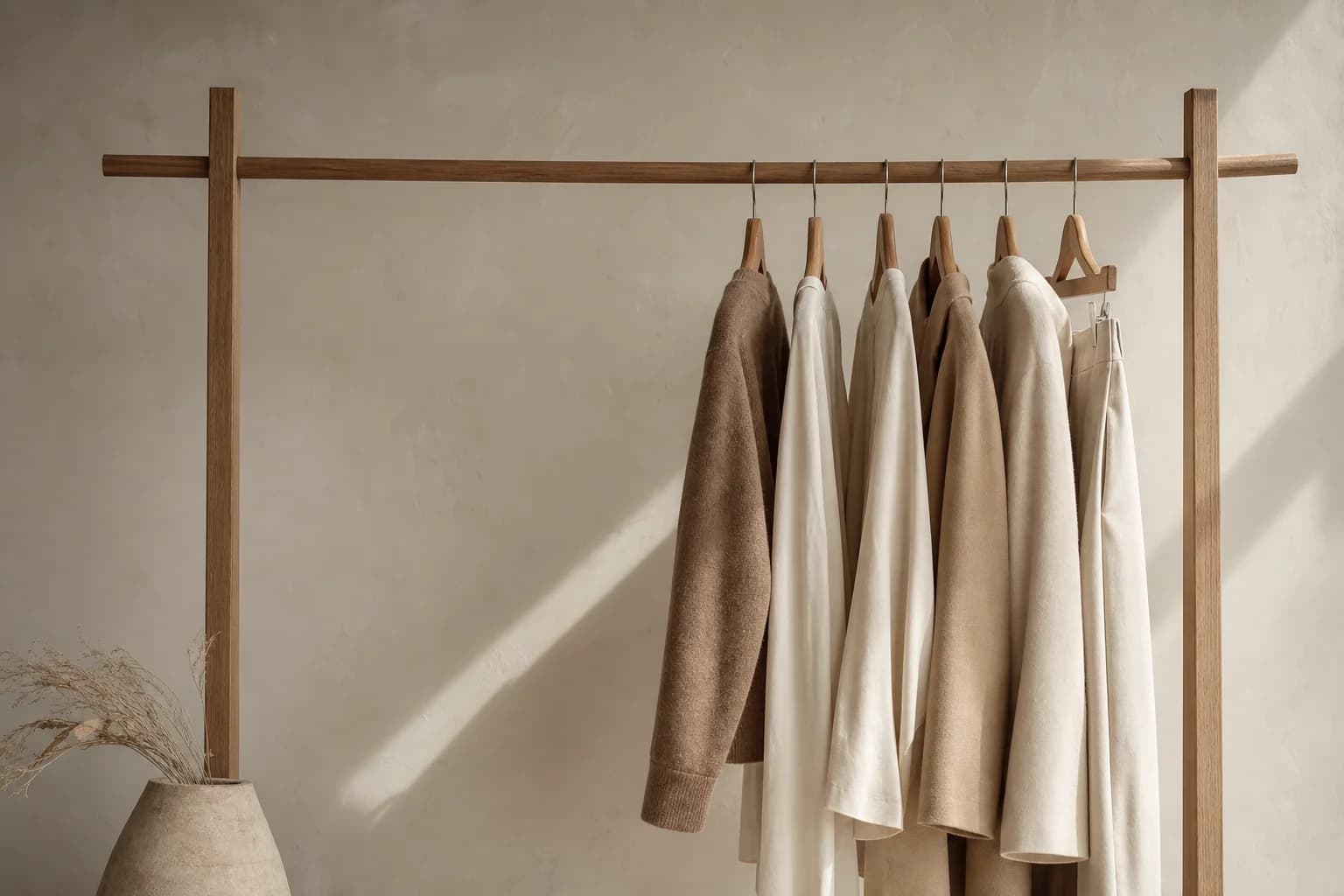
Hold the palette narrow and almost everything combines by default. Ivory, oatmeal, camel, charcoal and indigo will carry a whole year between them, and a piece that sits in that range is worn far more often than a piece that is merely interesting.
Weight matters as much as colour. A wardrobe that layers needs something thin enough to sit under something else — which is the job a poplin shirt or a fine merino does, and a chunky knit cannot.
Buying slowly
The useful question is not whether you like a piece. It is what you would wear it with, specifically, from what you already own. If three honest answers do not arrive quickly, it is a piece that will hang unworn.
Waiting also costs nothing. A garment you still want a fortnight later is usually a garment you will keep for years.
Knowing when to stop
A finished wardrobe feels slightly dull from the inside — everything goes, nothing surprises you, dressing takes a minute. That is not a lack of imagination. That is the thing working.